Executive Summary
The Global Trade Alert team documented 902 trade and industrial policy developments during September 2026. Four trends emerge:
- The US–Canada dispute widened beyond tariffs. Washington extended the 50% Section 338 duty to 110 further tariff lines and, from 29 September, imposed three import bans on Canadian goods. It also directed federal agencies to exclude Canadian-origin products from procurement. In Canada, New Brunswick now bars US goods and services from provincial contracts worth over CAD 5 million.
- Public procurement localisation expanded through both new rules and large domestic purchases. The European Commission proposed three new procurement frameworks embedding localisation and preference rules. Under its new Unmanned Vehicle Industry Development Act, Chinese Taipei excluded firms from mainland China, Hong Kong and Macao from public contracts and required the defence ministry to prioritise domestic suppliers. India's Defence Acquisition Council approved USD 11.6 billion of defence procurement, with 98% to be sourced from Indian industry.
- Public support for AI extended beyond chips to model developers and adopters. In France and Canada, support centred on developers. In Italy and China, subsidies were granted to support AI adoption.
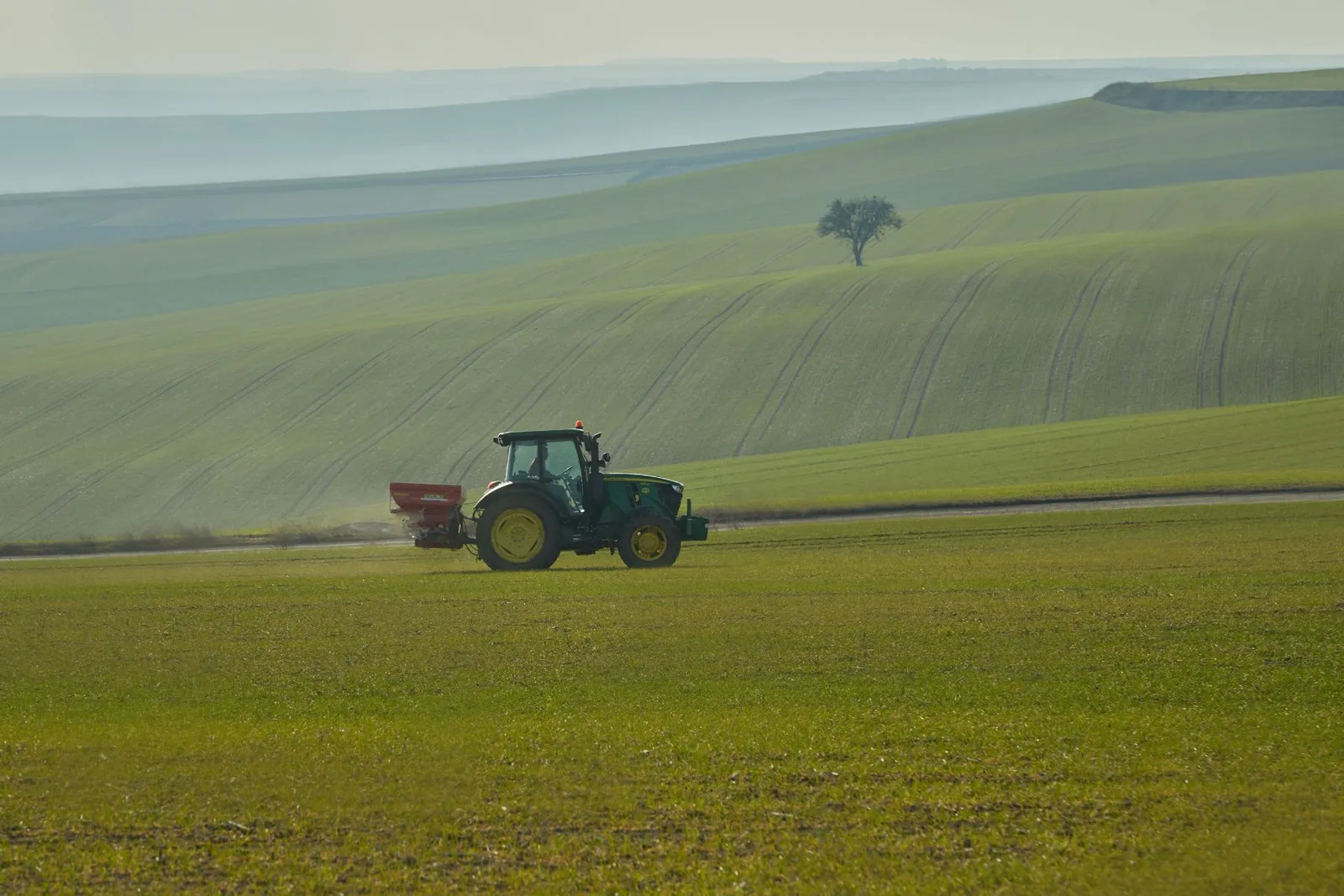
- Fertiliser supply got attention from different jurisdictions. Chinese Taipei now requires approval for ammonium sulphate exports. Italy granted USD 105 million to offset half of farmers' fertiliser cost increases. Argentina granted incentives to a project that will build two urea plants and one ammonia plant.
The GTA Monthly Roundup provides a rapid overview of changes in import barriers, export curbs, subsidies, and related industrial policy measures. It is organised by geography, beginning with the United States, China and the European Union. The final section briefly summarises developments in further regions covered by the GTA. Links to official sources are included in the references.
Jump directly to the section that interests you most:
United States
The United States escalated its Section 338 dispute with Canada in September, from additional duties to import bans and procurement exclusions. It also closed most civil aviation trade with Iran, capped polysilicon imports and narrowed its pharmaceutical tariffs. The GTA team documented 138 new developments in September.
Export Restrictions
Import Restrictions
Washington widened its Section 338 action against Canada, extending the additional 50% duty to further products and banning others outright. From 15 September, the 50% duty covers 76 further tariff lines in the motor vehicle case and 34 further lines in the alcoholic beverage case, on top of Section 232 duties. This reverses the July 2026 exclusion. The same proclamations removed the additional duties on salt, Portland cement and unwrought refined lead and some whiskies and liqueurs. From 29 September, three Section 338 import bans apply to Canadian goods already subject to the 50% duty. The broadest bans 53 tariff lines of alcoholic beverages. A second ban covers 14 lines of whey products, molasses and non-alcoholic beer, and a third motorcycles and mopeds. If a ban is invalidated, the duty applies instead.
Washington agreed on a reciprocal 30-for-30 tariff-reduction framework with Beijing. Each side approved a list of the other's goods worth about USD 30 billion in 2024 bilateral trade. The US list covers 77 tariff lines of Chinese consumer goods. The Administration will consider lowering tariffs on these goods under its domestic procedures.
The Bureau of Industry and Security (BIS) restricted polysilicon imports ahead of the Section 232 minimum prices and tariffs due on 4 December 2026. Importers with volumes far above their historic averages are barred from further entries until then. Those registered on or after 6 August face weekly caps. Both measures allow waiver applications.
The product scope of Section 232 pharmaceutical tariffs narrowed and several products now enter duty-free from 19 eligible jurisdictions. For products of the EU, Japan, South Korea, Switzerland and Liechtenstein, the rate falls from 15% to zero. For 14 further jurisdictions, including India, Indonesia, Chinese Taipei and Vietnam, it falls from 100% to zero. All 14 hold a trade and security framework agreement or an Agreement on Reciprocal Trade with the United States. The notice also removed three product groups from the duties for all origins.
OFAC's presumption of denial also covers licence applications for imports of Iranian-origin goods and services. According to the press release, the policy remains in place until Iran changes its conduct, including in the Strait of Hormuz.
The US opened two sets of trade defence investigations and imposed duties in existing cases against China. The International Trade Administration opened antidumping investigations on linear hydraulic cylinders from five countries and countervailing investigations on those from China, India and Mexico. It also opened parallel antidumping and countervailing investigations on perfluoroalkoxy alkane from India. Commerce imposed definitive antidumping and countervailing duties on Chinese L-lysine, and provisional countervailing duties on tin mill products and tris(hydroxymethyl)aminomethane.
Subsidies
Other Measures: Financial Sanctions and Public Procurement
China
China raised its policy-based financial instrument to CNY 800 billion in September and adopted five sectoral plans. At the border, it added export licensing for two precursor chemicals and imposed provisional antidumping duties on a Japanese semiconductor input. The GTA team documented 75 developments.
Export Restrictions
Import Restrictions
Subsidies
China's government disclosed the disbursement of its new policy-based financial instrument, with a budget of USD 119.2 billion up from USD 74.5 billion the year before. The instrument supplements the capital of priority projects across all sectors through China's three policy banks. Among the first named beneficiaries, the China Development Bank granted USD 46.2 million to a data centre in Inner Mongolia, USD 43.2 million for optoelectronic device production in Sichuan and USD 135.6 million for a nuclear heating plant in Lianyungang.
National ministries adopted five sectoral plans under the 15th Five-Year Plan. The electronic information manufacturing plan targets operating revenue above USD 4.5 trillion by 2030 in integrated circuits, electronic components, sensors and photonics. The plan for intelligent connected new energy vehicles calls for more export credit insurance for vehicle exporters. It also commits to national treatment of foreign-invested enterprises, including in government procurement. A battery industry plan supports financing for "backbone enterprises". The light and textile industries and SMEs plans cover the rest, the latter with a second phase of the National SME Development Fund. The Ministry of Industry and Information Technology also launched an AI + Software action plan that mentions special financial funds.
The People's Bank of China raised three quotas for relending, which funds commercial banks' lending to businesses on favourable terms, by a combined USD 104.3 billion. The quota for technological innovation and transformation rose by USD 29.8 billion, and the central bank will now relend 100% of qualifying loan principal, up from 60%. A further USD 74.5 billion went to agriculture and small businesses. This comprises USD 29.8 billion for agricultural enterprises and SMEs, plus a USD 44.7 billion increase in the quota for private enterprises.
Provincial and city governments announced investment funds. Linyi in Shandong plans the USD 1.5 billion Yimeng Industrial Investment Fund, starting at USD 559.3 million. It will invest through sub-funds and directly in companies in AI and 13 local industries. Shandong Province set up a USD 298.3 million Modern Services Industry Fund for technology services, logistics, finance, healthcare and elderly care. Fujian Province set up a USD 149.1 million seed fund for early-stage firms in emerging and future industries.
City governments also adopted grant schemes for AI and new materials. Wuhan's two-year package offers industrial enterprises up to USD 1.5 million per project for AI and technological transformation. Additionally, it provides up to USD 0.7 million each for innovation consortiums, start-up equity investment and demonstration scenarios in agents and smart terminals. Beijing will grant up to USD 0.7 million per innovation platform in new materials until the end of 2028. Xiamen's Siming District will cover 20% of firms' smart computing spending for AI in 2027, up to USD 0.7 million per enterprise.
European Union
The European Commission proposed three regulations in September that would build European preference into public procurement. Brussels also imposed a provisional safeguard on grain-oriented electrical steel and opened four antidumping investigations. Member states directed subsidies towards electricity supply, pharmaceuticals, AI and defence. The GTA team documented 149 new measures by the EU and its member states.
Import Restrictions
The Commission imposed a provisional safeguard on grain-oriented electrical steel (GOES) and on steel laminations and cores for transformers. It combines country-specific tariff-rate quotas with a price-based duty. Imports priced below a set threshold pay the difference between their price and that threshold. The threshold is higher for out-of-quota imports. Laminations and cores in imported transformers pay a flat USD 1'308 per tonne of core weight instead. Iceland, Liechtenstein, Norway, Kenya and Ukraine are excluded. Developing countries other than China, Brazil, Türkiye and the United Arab Emirates are excluded for specified products.
Trade defence also produced one definitive duty and four new cases. The Commission imposed definitive antidumping duties of up to 192.2% on alkyl phosphonic acids and their sodium salts from China, below the provisional rates of up to 219.4%. New antidumping investigations cover steel wire ropes and cables from India, Thailand and Türkiye, cellulose ethers from China and South Korea, acetylsalicylic acid from China and polyvinyl chloride from China, South Korea, Mexico and Chinese Taipei.
Ireland's ban on imports of goods from Israeli settlements in the Occupied Palestinian Territory took effect on 15 September. A statutory instrument designated the settlement postal codes covered, drawing on the list the EU uses to determine eligibility for preferences under the EU-Israel Association Agreement. Where a postal code spans both the settlements and Israel, importers may apply to the Revenue Commissioners for an exemption.
Subsidies
Germany, Austria and Luxembourg jointly proposed a USD 2.4 billion programme for electricity-based sustainable aviation fuel. A dual-auction mechanism will cover the price gap between eSAF producers and buyers, with the governments paying the difference. Germany contributes up to EUR 2 billion, and Austria and Luxembourg up to EUR 60 million each. The programme still needs state aid approval from the European Commission.
On the German energy front, the Commission approved a market-wide capacity mechanism worth at least USD 18.1 billion to secure electricity supply. Generators, storage operators and demand-response providers will compete in auctions for 15-year contracts, with delivery from 2031. All supported capacity must operate in a climate-neutral way by 2045. Separately, KfW IPEX-Bank extended a USD 291.3 million loan to BEN Berlin Energie und Netzholding, the state-owned operator of Berlin's distribution grid.
Germany also granted USD 464.6 million to Sanofi-Aventis Deutschland for a new insulin factory in Frankfurt-Höchst. In return, Sanofi must produce at least 1.1 tonnes of insulin a year. It also needs to stockpile 1 tonne of active ingredients until 2042, and prioritise markets in the European Economic Area during shortages.
EIB Group operations supported defence firms and SMEs. The EIB signed a USD 568.9 million facility with Crédit Agricole for French SMEs in the security and defence sector. In Poland, the EIF signed USD 392.3 million in guarantee agreements with ING Bank Śląski, POLFUND and UniCredit, using Recovery and Resilience Facility funds channelled through InvestEU. In Luxembourg, the national credit agency SNCI and the EIF launched the USD 314 million Luxembourg Future Fund 3, with contributions of USD 209.3 million from SNCI and USD 104.7 million from the EIF. The fund invests in venture capital, private equity and private debt funds backing start-ups and SMEs.
At the national level, national financial institutions of France and Italy actively supported private enterprises in AI, film, agriculture and exports. France's Bpifrance took part in the USD 3.5 billion Series D round for Mistral AI as an existing shareholder, in a round that valued the developer at more than USD 24 billion. It also committed USD 581.1 million over five years to French cinema and animation through equity, loans and guarantees. In Italy, SIMEST launched a USD 231 million scheme for SME investment in AI, split between loans of up to 90% and non-repayable grants of up to 10%. The government granted USD 105 million to offset half of fertiliser cost increases. Finally, export credit agency SACE provided a USD 200 million guarantee to VinFast Vietnam to increase its purchases of Italian goods and services.
Other Measures: Public Procurement
Other Regions
The GTA documented 540 developments announced by jurisdictions outside the US, China, and the European Union in the last four weeks. Significant developments include:
Argentina granted incentives to Fértil Pampa's Fertilizantes project under the Incentive Regime for Large Investments (RIGI in Spanish). The project will build two urea plants and one ammonia plant. Benefits include a five-year income tax cap of 25% and VAT credits, as well as exemptions from import duties and internal taxes on imported capital goods.
Australia imposed definitive duties on light gauge steel stud and track from China. These comprise antidumping duties of up to 37.8% and a countervailing duty of 4.5%.
Bangladesh halved the approved aromatic rice export volumes of 278 companies. The minimum export price of USD 1.60 per kilogram remains in place.
Brazil enacted its critical minerals policy and advanced four trade defence cases. Law No. 15'506 established the National Critical and Strategic Minerals Policy. It creates a USD 1.1 billion tax credit programme for firms that process critical minerals into products such as battery-grade materials, magnet inputs and fertilisers. It runs until 2034. Credits are awarded through competitive bidding and may require a minimum share of domestic goods and services. The law also sets up a USD 406.1 million guarantee fund for mining projects. On trade defence, it imposed provisional antidumping duties on glass fibres imported from China and Egypt. It also set definitive antidumping duties on PET resin from Malaysia and Vietnam, of up to USD 160.87 per tonne. In addition, Brasilia opened antidumping investigations on Chinese high-pressure steel cylinders and tempered glass for household appliances.
Canada funded domestic AI research and restricted US access to its procurement. Ottawa announced USD 107.6 million for LawZero, a Montréal-based AI research organisation. From 1 October, New Brunswick bars US goods and services from provincial contracts worth over CAD 5 million. It also directed public sector entities to integrate New Brunswick and Canadian products where alternatives exist. The province presented both as a response to US tariffs and bans.
Chinese Taipei cleared inbound and outbound investments, restricted procurement of unmanned vehicles and tightened export controls on a fertiliser. The Department of Investment Review approved ten investment projects whose values range from USD 100 million to USD 2.1 billion. Moreover, the country enacted the Unmanned Vehicle Industry Development Act. From 11 March 2027, public contracts for unmanned vehicles must exclude firms from mainland China, Hong Kong and Macao, and the defence ministry must give priority to domestically made unmanned vehicles. Separately, exports of ammonium sulphate now require approval from the Ministry of Agriculture.
Egypt established the USD 195.8 million Egypt Sub-Fund for Industrial Investment. The fund will invest directly in export-oriented companies and through other industrial investment funds. Target sectors include automotive components, electronics, food, textiles and pharmaceuticals.
The Eurasian Economic Union initiated a safeguard investigation on polymer-coated flat-rolled steel. The application came from Magnitogorsk Iron and Steel Works.
India combined defence localisation, farm price support and selective tariff cuts with a wave of trade defence cases. The Defence Acquisition Council approved USD 11.6 billion of defence procurement, 98% of it from Indian industry. The government also raised minimum support prices for six winter crops. On trade, the Ministry of Finance reduced duties on crude soybean and palm oil from 10% to 5% and on crude sunflower oil from 10% to zero. New Delhi opened 18 trade defence investigations, six of them on pharmaceutical ingredients. The antidumping cases include 6-aminopenicillanic acid and clavulanic acid from China and the EU. It also targeted Chinese imports of moxycillin trihydrate, montelukast sodium, penicillin G, glycine, persulphates and PTOP tackifier resin. Other antidumping cases include caprolactam from China, Russia, Thailand and the US, and isopropyl alcohol from the EU, South Korea, Chinese Taipei and the US.
Indonesia initiated an antidumping investigation on Chinese imports of galvanised zinc-coated steel sheets. It follows an application by Tata Metal Lestari and ArcelorMittal Steel Indonesia.
Iran continued to unwind its food export ban and widened restrictions on shipping in the Strait of Hormuz. The seventeenth exemption list released 23 products without conditions. Exports of palm fruit stones are permitted subject to prior approval. The Persian Gulf Strait Authority added 11 vessels and then 21 vessels to its Non-Compliance List.
Japan's JBIC signed a USD 171 million loan with JSW JFE Electrical Steel, a joint venture producing grain-oriented electrical steel in India. JBIC said the loan supports the overseas expansion of JFE Steel.
Mexico finalised steel and aluminium antidumping cases and eased import barriers. On trade defence, it imposed definitive antidumping duties for hot-rolled steel from China and Vietnam. It adopted similar duties for aluminium profiles and bars from China and hollow aluminium profiles from China and the US. Moreover, the country established provisional antidumping duties for Chinese coloured float glass and PVC canvas with textile reinforcement. Separately, it repealed the estimated reference prices for 757 textile and apparel tariff lines, in place since 2014. It also opened a duty-free quota of 10'000 head of live cattle until the end of 2026.
The Philippines suspended exports of fresh purple yam (ube) and its planting materials indefinitely from mid-August. The measure was disclosed in September.
Qatar raised import tariffs on chicken and, seasonally, on three vegetables. From 15 November, the duty on chicken rises from 5% to 18%, and eggplant and zucchini face 15% during their domestic harvest months. Tomatoes will face 15% from January to May each year.
Russia tightened export controls on industrial raw materials, cut agricultural export duties and supported SMEs hit by drone attacks. Moscow set an export quota for alloy steel scrap of 7'000 tonnes for the rest of 2026 and 20'000 tonnes for 2027. Exporters must show domestic deliveries three times larger than their requested export volume. The out-of-quota duty minimum rises from EUR 290 to EUR 490 per tonne from November. The government also reintroduced export licensing for unwrought lead and lead scrap and imposed licensing on sulphuric acid exports until the end of 2026. Conversely, it zeroed export duties on wheat, meslin, barley and corn and capped those on sunflower oil and meal until the end of 2026. On financial support, the Bank of Russia and the SME Corporation opened a USD 595.6 million programme of concessional loans and credit guarantees for SMEs. Beneficiaries include companies whose goods were destroyed in drone attacks on warehouses of RVB.
Saudi Arabia disclosed an increase in the Saudisation rate for project management professions from 35% to 70%. The measure is effective from 14 February 2027.
The Southern African Customs Union opened two antidumping cases and extended a duty following an anti-circumvention probe. It initiated investigations on polyethene terephthalate from China, Egypt and Oman, and on Portland cement from Vietnam and Mozambique. It also set definitive duties of up to 129.2% on windscreens from Malaysia. This latest action extends the antidumping duty on Chinese windscreens.
South Korea updated its export controls and deployed state finance. The trade ministry added AI chips, advanced semiconductor manufacturing equipment and nucleic-acid synthesisers to its dual-use list. It also removed some secondary cells from the list and narrowed the botulinum entry. The Export-Import Bank of Korea signed a USD 3.6 billion agreement with North Chungcheong Province. It covers financing for advanced materials supply chains, SME loans and provincial interest subsidies. The bank also lent USD 182 million to LG Chem for the country's first sustainable aviation fuel plant. The Industrial Bank of Korea provided USD 218 million in discounted loans to early-stage startups, and K-SURE provided USD 200 million to fund charter-hire payments to Korean shipping companies.
Thailand's Board of Investment approved four projects. These include Nestlé’s investment of USD 194.4 million to expand pet food production and Chinese ShuCan Technology’s investment of USD 134 million in printed circuit board assembly. Each approval bundles land ownership permits, corporate income tax exemptions, duty-free imports of machinery and other benefits.
Türkiye acted against two banks with Iranian links and launched support for its agrifood sector. The banking regulator transferred the shareholder rights in Golden Global Yatırım Bankası to the Savings Deposit Insurance Fund. Three days later, the regulator revoked the operating licence of Iran's Bank Mellat, closing its three branches in Istanbul, Ankara and İzmir. Moreover, Ankara announced the USD 750 million TARGET project, financed by a World Bank loan. Among others, it will provide USD 720 million in interest-free loans to medium-sized and mid-cap agrifood enterprises.
Ukraine expanded its sanctions against Russia's shadow fleet and military industry. Kyiv barred 20 tankers from its ports and waters, which it said carry Russian oil to India, Egypt and Türkiye. It also listed 28 Russian entities, including units of the Kalashnikov concern and the Shvabe holding, and one research institute in the occupied territories.
The United Kingdom expanded British Business Bank support for farmers, technology firms and regional SMEs. The bank agreed a USD 664 million guarantee with Oxbury Bank for lending to smaller farms, its largest single facility to date. It committed USD 101 million to Molten Ventures Growth Fund I for growth-stage technology companies. Moreover, it launched the USD 284 million South East Investment Fund, offering SMEs equity of up to GBP 5 million and loans of GBP 25'000 to GBP 2 million.
Sign up here to receive every Monthly Roundup prepared by the GTA.