Executive Summary
The Global Trade Alert team documented 480 new trade and industrial policy interventions during July 2025. Five trends emerged:
-
Confusion reigned over the US country-specific “reciprocal tariffs”. Until 31 July, when a new Executive Order consolidated the "reciprocal tariffs" for 69 jurisdictions, significant confusion persisted among trading partners regarding applicable rates and their scope. Concurrent with Trump sending over 20 letters to Heads of State, the US reached bilateral trade agreements that reduced several previously announced tariff rates. These negotiations resulted in lower tariffs for Cambodia, the EU, Indonesia, Japan, the Philippines, South Korea, and Vietnam.
-
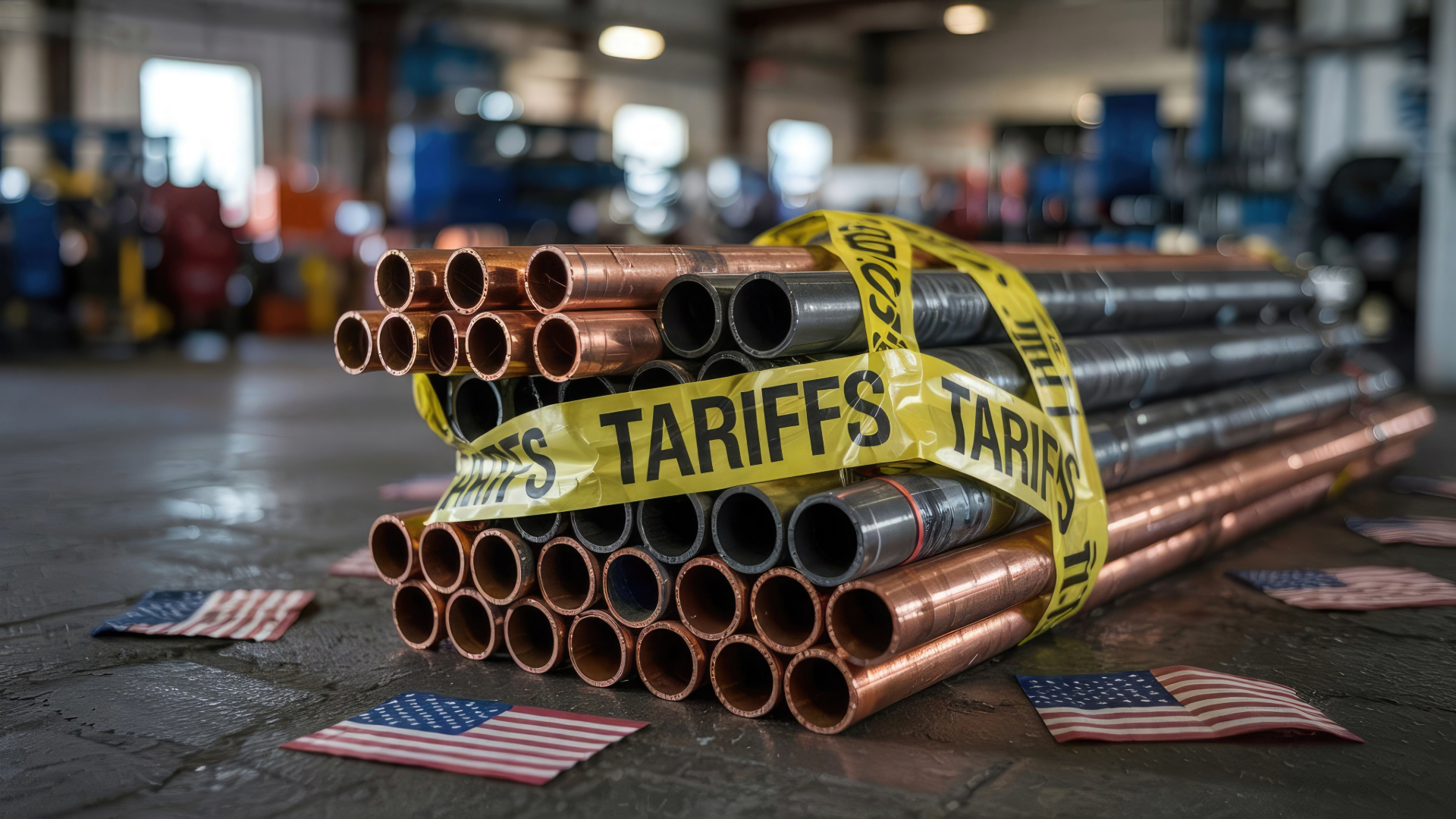
The US pursued additional dimensions of its tariff strategy. Regarding “sectoral tariffs”, Washington imposed duties on copper products, citing national security concerns. Washington also initiated new Section 232 investigations targeting unmanned aircraft systems and polysilicon imports. Additionally, the US suspended duty-free de minimis treatment for imports from all countries.
-
Domestic sales requirements enter the scene. The US invoked the 1950 “Defense Production Act” to mandate future domestic supply commitments for copper producers. The Secretary of Commerce will draft regulations requiring producers to sell at least 25% of their copper input materials and high-quality copper scrap to domestic buyers.
-
Trading partners continued responding to US tariffs in diverse ways. Some pursued trade deals with the US. Others retaliated (EU), threatened retaliation (Brazil and India), or supported domestic industries (Canada). Malaysia and Mexico introduced targeted measures reportedly designed to address US concerns.
-
EU-China tensions escalated, yet industrial policy alignment emerged. Beijing responded to EU restrictions on Chinese medical devices by introducing reciprocal limits in public procurement. At the same time, both sides ramped up their focus on strategic sectors. The EU launched its "Quantum Strategy" and "Life Sciences Strategy”, while China accelerated support for 6G, quantum technologies, and robotics.
The GTA Monthly Roundup provides a rapid overview of changes in import barriers, export curbs, subsidies, and related industrial policy measures. It is organised by geography, beginning with the United States, China and the European Union. The final section briefly summarises developments in further regions covered by the GTA. Links to official sources are included in the references.
United States
The United States modified its reciprocal tariffs regime affecting numerous countries and signed trade deals. It also enacted the "One, Big, Beautiful Bill" legislation and imposed financial sanctions. The GTA team documented 88 new interventions during the last four weeks.
Export Restrictions
Import Restrictions
On 31 July, the White House issued a new Executive Order (EO) consolidating the "reciprocal tariffs" for 69 jurisdictions. Tariffs for 40 jurisdictions, including the European Union, were raised from 10% to 15%. Most Asian jurisdictions saw increases to 19% or 20%, with India facing a higher rate of 25%. A final group of diverse jurisdictions experienced tariff hikes ranging from 30% to 41%, including Switzerland, which was assigned a 39% rate. President Trump had announced these changes in early July, when the regime’s implementation was postponed from 9 July to 1 August. On 7 July, the White House sent letters to 14 Heads of State announcing varied tariff rates, including Indonesia, Japan and South Korea. Two days later, additional measures targeted eight more jurisdictions, including Brazil. On 11 July, President Trump targeted the European Union and Mexico. These letters were sent to many jurisdictions, including some with which the US later signed bilateral deals. The rate and scope for those who reached such agreements were partially clarified in the 31 July EO.
Over the past two weeks, the White House officially confirmed trade deals reducing previously announced reciprocal tariffs. The “US-Japan Strategic Trade and Investment Agreement” established a 15% baseline tariff rate, down from the previously announced 25%. The “Framework for negotiating an Agreement on Reciprocal Trade with Indonesia” set tariffs at 19%, replacing the earlier 32% rate. Under the “US-EU Cooperation Agreement on Reciprocal, Fair and Balanced Trade”, the US committed to 15% tariffs on most EU imports, including autos, auto parts, pharmaceuticals, and semiconductors. This represents a reduction from the previously announced 30%. Although the July 31 Executive Order did not explicitly reference signed agreements, the White House confirmed reduced "reciprocal tariffs" for Cambodia (from 49% to 19%), the Philippines (from 20% to 19%) and Vietnam (from 46% to 20%).
Furthermore, the US suspended the duty-free de minimis treatment for all countries. Effective 29 August 2025, shipments valued at USD 800 or less, previously duty-free, will now be subject to a duty based on the IEEPA tariff rate of the country of origin (including the applicable “reciprocal tariffs”). Carriers must choose between an ad valorem or a specific duty, with the latter applying a flat fee per package. Specifically, for countries with an IEEPA tariff rate above 25%, the duty is USD 200 per item; for rates between 16% and 25% (inclusive), the duty is USD 160 per item; and for rates below 16%, the duty is USD 80 per item.
Regarding “sectoral tariffs” developments, the Trump Administration imposed an additional 50% tariff on imports of semi-finished copper products and intensive copper derivative products. The measure follows a national security assessment under Section 232 of the Trade Expansion Act of 1962. The Department of Commerce launched new Section 232 investigations into unmanned aircraft systems and polysilicon and related products, with potential import tariffs and quotas likely following any national security findings.
The Trump Administration increased the additional IEEPA duties on Canadian imports from 25% to 35% in response to concerns about illicit drug trafficking. Effective 1 August, the higher tariffs build on previous measures of February 2025.
The USTR initiated a Section 301 investigation into Brazil's digital, trade, and corruption-related policies and practices. Should findings confirm these practices burden US commerce, the USTR is authorised to impose retaliatory measures, including new tariffs or other non-tariff actions.
Subsidies
The Trump Administration unveiled its “Winning the AI Race: America’s AI Action Plan”, calling for increased financial support for next-generation AI technologies. The plan also called for export promotion for AI technologies, including hardware, models, software, applications, and standards, to all countries willing to join “America’s AI alliance”.
MP Materials announced a public-private partnership with the Department of Defense (DoD) aimed at building a domestic rare earth magnet supply chain. The DoD has not confirmed the details or provided timelines. The agreement reportedly includes USD 150 million in loans, USD 400 million in equity support, a 10-year price floor guarantee for the company's rare earth products, and a purchase commitment.
The approved "One, Big, Beautiful Bill" (OBBB) introduced new subsidy programmes targeting domestic industrial capacity, as well as terminated or modified several Biden-era ones established under the “Inflation Reduction Act”. Notably, the OBBB enhanced the "Advanced Manufacturing Investment Credit" by increasing the tax credit rate from 25% to 35% for semiconductor manufacturing facilities. It also established supplemental agricultural trade promotion programmes, providing enhanced export incentives for American farmers to expand overseas market access. Conversely, the legislation repealed the "Alternative Fuel Vehicle Refueling Property Credit" and terminated the "Clean Hydrogen Production Credit" for facilities whose construction begins after 31 December 2027, eliminating incentives for clean vehicles and hydrogen production. The OBBB also established domestic content requirements for federal procurement of shipbuilding turbine generators, steel plates and uranium enrichment centrifuges. Moreover, the Bill imposed new eligibility restrictions on several tax credit schemes by disqualifying entities with ties to adversarial nations, specifically China, Russia, Iran, and North Korea.
Other Measures: Sanctions, Investment Controls, and Trade Defence
The Treasury Department implemented sanctions targeting Iran-linked oil networks and North Korea. On 3 July, sanctions were imposed on entities based in the United Arab Emirates, Seychelles, Marshall Islands, the British Virgin Islands, Singapore, the United Kingdom, and Liberia for their involvement in facilitating Iranian procurement activities. On 9 July, similar sanctions targeted Turkey and United Arab Emirates-based entities and Hong Kong-based entities serving as front companies for Iranian operations. On 22 July, the US sanctioned two United Arab Emirates entities and three Yemeni entities for their involvement in Iranian oil sales and defence procurement. More recently, the Treasury Department also sanctioned North Korean-based Sobaek Trading Corporation for its role in weapons procurement activities.
The Treasury Department prohibited the acquisition of Jupiter Systems by Chinese-owned Suirui Group due to national security reasons. Following a Committee on Foreign Investment in the United States (CFIUS) national security review, the US Treasury cited risks of potential compromise to Jupiter's products used in military and critical infrastructure settings.
Regarding trade defence, the International Trade Administration imposed provisional antidumping duties ranging from 371.6% to 450.6% on Chinese erythritol imports, as well as provisional antidumping duties on float glass products from China (246.7%-311.8%) and Malaysia (8.55%-850.42%). It applied anti-circumvention duties to Oman, extending the antidumping duties on circular welded carbon quality steel pipes from China. It also initiated an anti-circumvention investigation on Thailand and Vietnam targeting aluminium products using Chinese aluminium foil.
China
During July 2025, China implemented retaliatory measures against the EU and continued expanding its domestic industrial support programmes. The country also tightened export controls on sensitive technologies. The GTA team documented 25 new interventions.
Export Restrictions
Subsidies
Other Measures: Procurement Countermeasures
European Union
The EU focused on consolidating its response to US trade policies, advanced strategic industrial initiatives and tightened sanctions against Russia. The GTA team documented 65 new interventions announced by the EU and its member states.
Export Restrictions
Import Restrictions
The EU confirmed the non-binding EU-US trade deal on 27 July 2025, under which the EU agreed to zero-for-zero tariffs on strategic products. According to the Commission, these include the removal of tariffs on industrial products, but also selected agricultural products, natural resources, and critical raw materials. The EU also pledged USD 750 billion in increased purchases of US energy products to replace Russian gas and oil with American LNG, oil, and nuclear fuels, alongside EUR 40 billion in purchases of US AI chips. Although the agreement has been signed and confirmed by both parties, it remains subject to future implementation notices.
A couple of days prior, the EU published its consolidated countermeasures package against the US, imposing additional duties on several products. Effective 7 August, the package established additional ad valorem duties of 7%, 10%, 20%, or 25% on 1’588 US products. The EU also announced additional tariffs on 4’593 US products effective 7 September, followed by duties on five specific products from 1 December, and tariffs on 77 products scheduled for 7 February 2026. Previously, the EU had also suspended the entry into force of its first countermeasure package until 7 August. At the time of writing, the package had not been officially withdrawn or suspended following the deal with the US.
As part of its sanctions regime, the EU prohibited imports of petroleum products containing Russian crude oil. The measure affects imports from all trading partners except Canada, Norway, Switzerland, the UK, and the US.
Subsidies
Other Measures: Sanctions and Trade Defence
As part of the 18th sanctions package, the EU prohibited the provision of specialised financial messaging services, such as the SWIFT system, for 22 new Russian banks. Brussels also prohibited any transactions related to the Nord Stream 1 and 2 projects. The measure aims to prevent the completion, maintenance, operation and future use of the pipelines that carry natural gas in gaseous form from Russia to the EU. Moreover, it expanded its financial sanctions targeting eight Belarusian companies and 23 Russian companies. It also froze the funds of entities established in India, Mauritius, Hong Kong, China, Singapore, and the United Arab Emirates.
The Commission also modified the price cap mechanism for Russian oil. Specifically, it restricted the provision of commercial, financial and transport services related to the exportation of Russian oil priced above USD 47.6 per barrel. Since December 2022, the price cap has been USD 60 per barrel. The measure was coordinated with the United Kingdom (see below). Port restrictions complemented these measures, with the EU forbidding port access and services to 105 vessels connected to sanctioned activities.
The EU imposed provisional antidumping duties ranging between 111.9% to 136.3% on Chinese fused alumina imports, effective 19 July 2025. Furthermore, it set definitive antidumping duties of on Chinese multilayered wood flooring (21.3%-36.1%).
Other Regions
The GTA documented 302 new interventions announced by jurisdictions outside the US, China, and the European Union in the last four weeks. Significant developments include:
Argentina approved the "Siderúrgico Argentino Sidersal" as a beneficiary of the “Incentive Regime for Large Investments” (RIGI) in the "Long-Term Export Promotion Project" modality. The scheme allows duty-free imports of capital goods and equipment along with additional fiscal incentives for qualifying large investments. Furthermore, Buenos Aires established temporary import tariff-rate quotas on microcrystalline petroleum wax and benzothiazyl disulfide.
Australia allocated AUD 275 million to support Whyalla Steelworks' operational continuity during its transition to new ownership. The government also initiated parallel antidumping and countervailing investigations on light gauge steel stud and track from China.
Bangladesh authorised exports of 850 tonnes of aromatic rice, while setting a minimum export price of USD 1.60 per kg. These measures remain valid until March 2026.
Brazil published the 2025/2026 edition of its Agricultural and Livestock Plan (SAFRA Plan) with a budget of BRL 400.6 billion. The plan is the main Brazilian initiative to support local farmers. Following the US tariff announcements, Brazil issued a statement declaring potential countermeasures under the “Economic Reciprocity Law” approved in April 2025. The country also launched antidumping investigations on hot-rolled stainless steel from China, Indonesia, and India and decorative paper from China.
Canada introduced a 25% surtax on steel and aluminium goods containing materials melted, poured, smelted, or cast in China. This measure applies to imports from all countries except the US. It further promised additional support for the domestic steel sector affected by US tariffs, the introduction of new import tariff-rate quotas for countries with and without FTAs, as well as public procurement localisation requirements. In addition, Ottawa initiated antidumping and anti-subsidy investigations on cast iron soil pipe from China.
Egypt allocated EGP 5 billion for supporting MSMEs. The government did not disclose the type of support or which sectors will benefit.
The Eurasian Economic Union initiated antidumping investigations on spark plugs from China.
India approved an “Employment Linked Incentive Scheme” worth INR 99’446 crore to incentivise job creation until July 2027. It also launched the “Research Development and Innovation Scheme” worth INR 100’000 crore. New Delhi notified the WTO of potential countermeasures to the US, particularly towards its auto and auto parts Section 232 tariffs.
Indonesia finalised a framework trade deal with the US. Under it, the country committed to slashing import tariffs from undetermined US products as well as “direct purchases of key US commodities, such as energy and agricultural products”.
Iraq imposed an additional 40% customs duty on imported tiles and ceramic adhesives for four years. Baghdad also eliminated import licence requirements for engine oils, greases, and used vehicle spare parts.
Japan also confirmed a trade agreement with the US. Tokyo committed to providing up to USD 550 billion in investment support for Japanese companies looking to expand to the US, increased import tariff-rate quotas for US staple rice, and expanded purchases of US agricultural products, semiconductors, aircraft, and others. In terms of subsidies, the Ministry of Economy, Trade and Industry granted JPY 17.2 billion to Japan Metals and Chemicals and JPY 2.2 billion to JX Nippon Mining & Metals, while the Japan Bank for International Cooperation (JBIC) provided a USD 626 million loan to Mitsui & Co and a JPY 31 billion loan to Yokohama Rubber. The country also initiated antidumping investigations on nickel-based stainless steel from China and Chinese Taipei.
Kenya allowed the duty-free importation of 500’000 metric tonnes of white rice. The rice must be imported by 31 December 2025
Malaysia imposed restrictions on exports, transit, and transhipment of high-performance AI semiconductors. Although a related press release specifies that this restriction is for "high-performance AI chips of US origin", Directive No. 1/2025 does not indicate any specific origins for affected products.
MERCOSUR countries reduced import duties on vitamin B12 preparations, coffee capsules, and certain surgical apparatus.
Mexico raised the flat tax rate on small courier and parcel imports under USD 117 from 19% to 33.5%, effective 15 August 2025. Press reports indicate that the measure is designed to address US concerns. Moreover, the government disclosed USD 350 million to state-owned electricity company CFE for the construction of a combined cycle power plant in San Luis Potosí. The funding disclosure coincided with the inauguration of the facility.
Morocco secured EUR 100 million from the African Development Bank for its “Support Program for Inclusive Solidarity Agriculture for Women and Youth” (PAASIFEJ). The support will be provided through financial assistance and in-kind grants.
Nigeria’s Oando Oil Limited received a USD 375 million lending facility from Afreximbank. The loan will allow the company to meet increased oil and gas production goals.
Pakistan reduced additional customs duties affecting thousands of tariff lines. The duties were reduced from a range between 2% and 7% to a range between 0% and 6%.
Philippines approved import quotas of 424’000 metric tonnes for refined sugars for domestic farmers, subject to an import fee of PHP 0.66 per kg.
Russia exempted certain investment transactions of foreign investors from "unfriendly" states from certain countermeasures. It also added Daimler Truck AG to its list of designated foreign entities, prohibiting commercial transactions and banning exports to the German manufacturer. Moscow re-introduced export licensing requirements for unwrought lead, temporarily eliminated export duties on sunflower oil and meal products until August 2025, and provided RUB 62.5 billion in tourism sector loans.
South Africa granted an additional ZAR 94.8 billion guarantee to Transnet to cover debt redemptions and maintain liquidity for the next five years. In addition, the country introduced new export and import licensing requirements for certain steel products through updates to the Prohibited and Restricted Imports and Exports list. More recently, the government lifted import licensing requirements to selected machine tools.
South Korea confirmed a trade deal with the US, committing to invest up to USD 350 billion in the US and to purchase USD 100 billion worth of US energy products. The government allocated USD 150 million for Korean exports of wind power equipment for the Changhua 2 offshore wind project. K-Sure provided USD 200 million in financing to Singapore-based Trafigura. On classic trade measures, Seoul introduced new import tariff-rate quotas for agricultural and fisheries products and increased the in-quota volumes of existing ones.
Türkiye raised the in-quota volume on corn and introduced a new import tariff quota on sunflower seeds and oil. The country also amended import licensing requirements for PV cells and chemical elements for electronics.
The United Kingdom, in coordination with the EU, announced a new round of sanctions against Russia (see above). The package includes financial sanctions on UAE-based entities in Russia's energy sector, sanctions on 135 oil tankers involved in the Russian oil trade and a reduction of the Russian crude oil price cap from USD 60 to USD 47.60 per barrel. On the subsidies front, the UK granted EUR 245 million for UK exports to the Greater Changhua 2 offshore wind project, and GBP 2.5 billion in guarantees for air defence missile deliveries to Ukraine. Additionally, the government launched the GBP 2.5 billion “DRIVE35” scheme to boost zero-emission vehicle manufacturing and called for GBP 2 billion in funding for national AI computer infrastructure through 2030.
Sign up here to receive every Monthly Roundup prepared by the GTA.