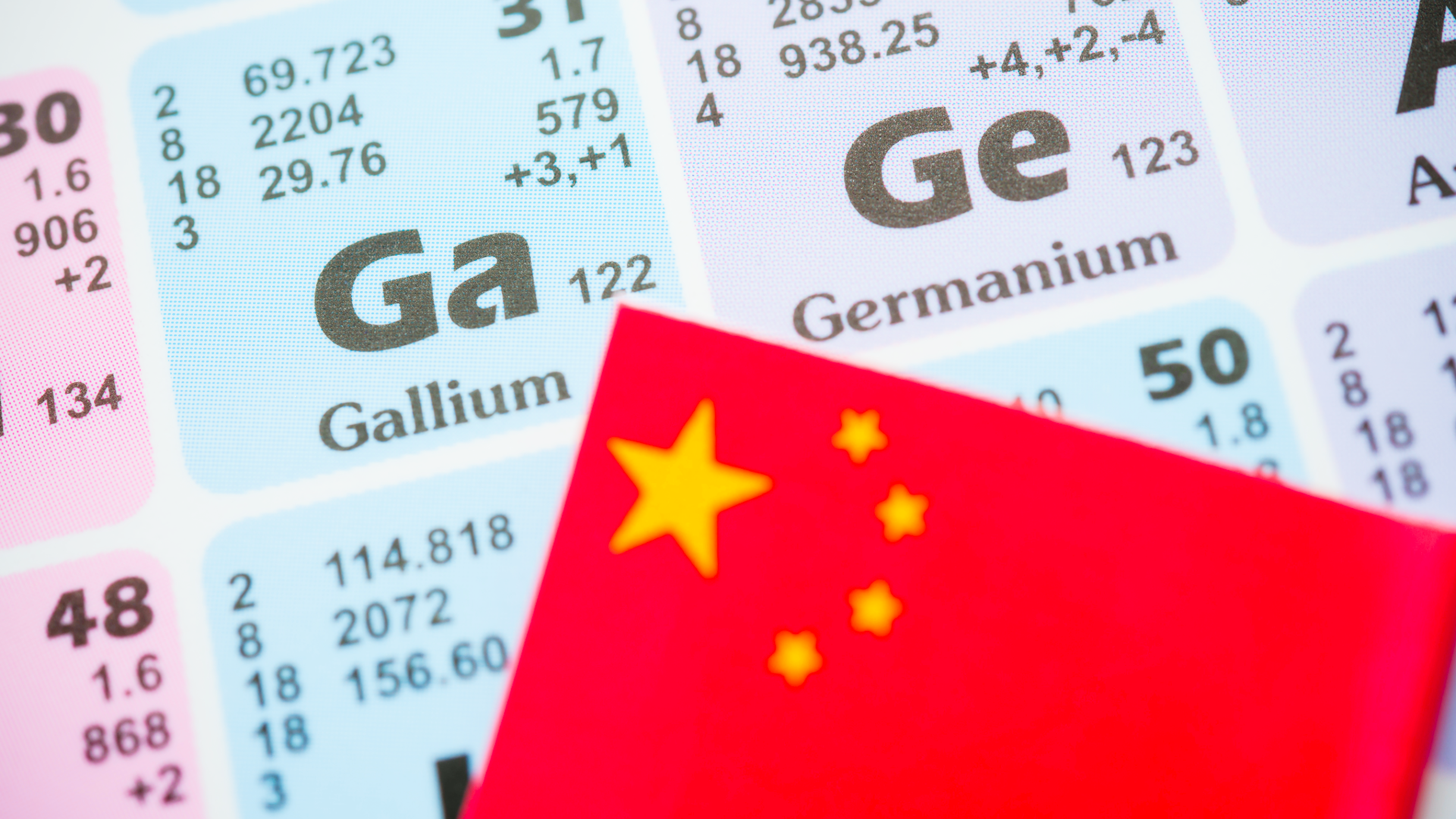
- 9 October 2025: {restrictive} China's Ministry of Commerce implemented immediate export controls on rare-earth technologies. Announcement 62 requires licenses from the Ministry of Commerce (MOFCOM) for exports of technology related to rare-earth mining, processing, manufacturing, and recycling.
- 9 October 2025: {restrictive} China's new export controls restrict foreign entities from accessing rare-earth technologies even within China's borders. Announcement 62 requires special licenses for any transfers, including intellectual property licensing, investments, and technical exchanges.
- 9 October 2025: {restrictive} China announced licensing requirements for foreign entities exporting Chinese-origin rare-earth materials and products via Announcement 61. Effective immediately, foreign exporters anywhere in the world must obtain a dual-use export license from MOFCOM before shipping certain Chinese-origin rare-earth materials, including heavy rare-earth elements like samarium, dysprosium, gadolinium, terbium, and their key alloys and oxides.
- 9 October 2025: {restrictive} From 1 December 2025, export controls extend to foreign-made products with Chinese content via Announcement 61. Products that either contain at least 0.1% by value of Chinese-origin rare-earth materials or are manufactured using Chinese rare-earth technologies (covering mining, processing, refining, magnet production, and recycling) will also be subject to the export license.
- 9 October 2025: {restrictive} Effective 8 November 2025, China announced export licenses on lithium battery components and artificial graphite materials. Announcement 58 covers items like high-density lithium-ion batteries, cathode materials, artificial graphite anode materials, and related equipment and associated technologies.
- 9 October 2025: {restrictive} Effective 8 November 2025, China announced export licenses on medium and heavy rare earth elements. Announcement 57 includes holmium, erbium, thulium, europium, and ytterbium) and related materials.
- 9 October 2025: {restrictive} China announced further export licenses on rare earth equipment, raw materials, and related items across the entire supply chain. Announcement 56 is also in force from 8 November 2025.
- 9 October 2025: {restrictive} Effective 8 November 2025, announced export licenses on superhard materials and related products. Announcement 55 covers artificial diamond products, DCPCVD equipment and others.
-
25 September 2025: {restrictive} China added three US companies (Huntington Ingalls Industries, Planate Management Group, Global Dimensions LLC) to its Dual-Use Export Control List. Exports of dual-use items to these entities are prohibited, with ongoing export activities requiring immediate cessation.
-
12 August 2025: {liberalising} China permanently removed 12 US companies from its Dual-Use Export Control List. This allows these firms to resume purchasing dual-use items, including rare earths, germanium, and graphite.
-
15 July 2025: {restrictive} China revised its Catalogue of Technologies Prohibited and Restricted from Export, adding battery positive electrode material preparation technologies. Lithium carbonate and lithium hydroxide production technologies from spodumene, metal lithium preparation technology, and lithium extraction from brine now require export licences.
-
9 July 2025: {restrictive} China added eight Taiwanese companies (including Aerospace Industrial Development Corp, GEOSAT Aerospace & Technology, National Chung-Shan Institute) to its Dual-Use Export Control List. Exports of dual-use items to these entities are prohibited, with exemptions possible under special circumstances upon application.
-
11 June 2025: {liberalising} China reportedly granted JL MAG Rare-Earth Co an export licence for medium and heavy rare-earth materials. The licence covers rare earth metals and rare earth compounds.
-
6 June 2025: {liberalising} China reportedly approved export licences for Chinese suppliers to General Motors, Ford and Stellantis for rare-earth materials. The licences cover rare earth metals and rare earth compounds.
-
14 May 2025: {liberalising} China reportedly granted export licences to suppliers including Zhongke Sanhuan and Ningbo Yunsheng for Volkswagen. The licences permit exports of rare earth metals and rare earth compounds.
-
14 May 2025: {liberalising} China temporarily suspended adding 28 US companies to its Export Control List for 90 days. This enables firms to apply for export licences for dual-use goods, including rare earths and germanium.
-
4 April 2025: {restrictive} China implemented export controls on medium and heavy rare earth elements including samarium, gadolinium, terbium, dysprosium, lutetium, scandium, and yttrium. Exporters must obtain special licences for items covered under 33 HS codes at 10-digit level.
-
4 March 2025: {restrictive} China added 15 US companies (including Leidos, Skydio, Shield AI, General Atomics Aeronautical Systems, General Dynamics Land Systems) to its Export Control List. Exports of dual-use items to these entities are prohibited, with ongoing activities requiring immediate halt.
-
4 February 2025: {restrictive} China announced export control measures for tungsten, tellurium, bismuth, molybdenum, and indium under 41 HS codes at 10-digit level. Exporters must apply for special licences for these critical raw materials and related technologies, with penalties for unlicensed exports.
-
2 January 2025: {restrictive} China added 28 US defence companies (including General Dynamics, L3 Harris Technologies, Boeing Defense, Lockheed Martin, Raytheon) to its Export Control List. Exports of dual-use items to listed entities are prohibited, safeguarding national security and fulfilling non-proliferation obligations.
-
31 December 2024: {liberalising} China removed 55 tariff lines from its export licensing catalogue. Affected goods include products under HS chapters 27, 28, 29, 38, 72, and 87, no longer requiring export licences.
-
31 December 2024: {restrictive} China published its 2025 dual-use catalogue for export licensing, adding 72 tariff lines at 10-digit HS code level. Affected goods listed under HS chapters 28, 29, 36, 38, 39, 81, 84, and 90 now require export licences.
-
31 December 2024: {restrictive} China published its 2025 export licensing goods catalogue, adding 21 tariff lines at 10-digit HS code level to licensing requirements. Affected goods listed under HS chapters 27, 28, 29, 38, 72, and 87 require licences before export.
-
3 December 2024: {restrictive} China banned exports of gallium, germanium, antimony, and superhard materials to the United States in principle, tightening previous licensing requirements. The measure also implements stricter end-user and end-use reviews for graphite exports to the US.
-
3 December 2024: {restrictive} China prohibited exports of dual-use items to US military users or for military purposes, citing national security concerns. The ban covers extensive dual-use items previously subject to export licensing, responding to US semiconductor export controls.
-
15 August 2024: {restrictive} China announced export controls on antimony and related items, including metal antimony, antimony hydride, antimony ore, and superhard materials under 17 HS codes. Effective 15 September 2024, exporters must obtain special licences, with the government opposing use against China's sovereignty and development interests.
-
23 April 2024: {restrictive} China amended its Catalogue of Precursor Chemicals for Export to Specific Countries, adding Afghanistan to the specific country list. Exporters now need licences for shipments of catalogue goods to Afghanistan, with several chemicals added and removed.
-
23 April 2024: {liberalising} China amended its Catalogue of Precursor Chemicals, removing certain chemicals from export licensing requirements to specific countries. This liberalised trade in specified precursor chemicals for pharmaceutical production, starting 1 May 2024.
-
31 December 2023: {liberalising} China announced its 2024 export licensing goods catalogue. It approved export licences for several South Korean battery companies to import graphite for cathode production.
-
29 December 2023: {liberalising} China removed four tariff lines from its annual export licensing catalogue. Products affected include fluorite and molybdenum.
- 21 December 2023: {restrictive} China's revised export catalogue of restricted technology goods required export licenses for mining engineering technology for processing non-ferrous metals, specifically including technology for making rare-earth magnets.
-
20 October 2023: {restrictive} China introduced export licensing requirements for high-purity, high-hardness, and high-intensity synthetic graphite materials, plus natural flake graphite under five tariff subheadings. The measure safeguards national security, with exporters needing special licences and dual-use item documentation.
-
20 September 2023: {liberalising} China reportedly granted Beijing Tongmei Xtal Technology an export permit for gallium and germanium exports. The subsidiary met applicable legal and commercial requirements.
-
3 July 2023: {restrictive} Effective 1 August 2025, China implemented export controls requiring special licences for gallium and germanium-related items, establishing documentation requirements for dual-use items and technologies. Unlicenced exports result in penalties and possible investigation, justified by national security concerns.