
The Missing Deliverable: The US-China Board of Trade in Sharper Relief
ZEITGEIST SERIES BRIEFING #94


ZEITGEIST SERIES BRIEFING #94
Simon Evenett
16 May 2026
1. Why Write About a Non-Event?
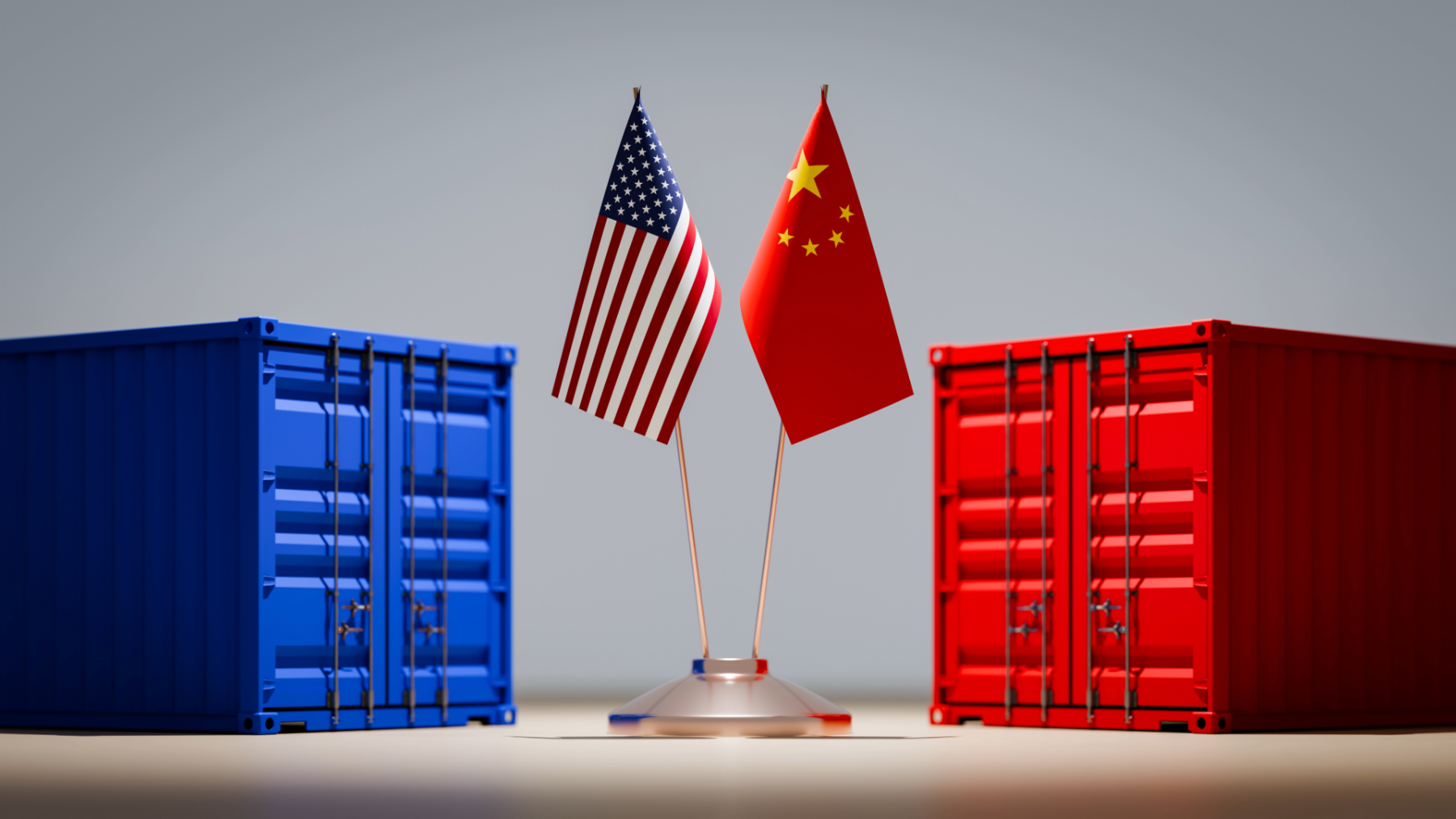
At the summit between Presidents Trump and Xi held in Beijing on 14 and 15 May 2026, the proposed US-China Board of Trade was not announced. For some weeks, US officials had mooted its creation as a vehicle for managing bilateral trade. The US Trade Representative, Ambassador Jamieson Greer, had contended that this move would constitute a significant summit deliverable. That did not come to pass.
Yet this summit did produce something of value to trade policy observers: in interviews given during and immediately after the meeting, Secretary of the Treasury Scott Bessent and Ambassador Greer disclosed more about the content of the proposed initiative than had previously been on the public record. The Board of Trade, though still unannounced, is now in sharper relief.
This note has two purposes. The first is to set out, as precisely as the available statements permit, what the Board of Trade is proposed to do. When reports first linked the term to the concept of managed trade, the possibility arose that the initiative might repeat trade arrangements seen in the 1980s, specifically the institution of voluntary export restraints and voluntary import expansions.[1] May 2026. On the basis of recent statements by US officials, it is now apparent that the Board’s first initiative does not amount to a return to that earlier era: the Board of Trade is presented as a vehicle for tariff reduction on a to-be-defined category of goods, not a system of negotiated quantity targets. That distinction matters, and it shapes the assessment that follows.[2]
The second purpose of this note is to weigh up what the proposal and the non-announcement reveals about the direction of US trade policy toward China.
Section 2 sets out the context in which the summit took place, with particular attention to the factors that may account for the absence of a formal announcement. Section 3 summarises what US officials have said about the initiative. Section 4 identifies the principal questions that the proposal raises, grouped by theme. Section 5 addresses those questions that can be answered on the basis of currently available information. Section 6 draws six conclusions about the likely significance of the Board of Trade initiative and about what its fate at the summit reveals. The primary source material (such as it is) can be found in the Annex.
2. Context
2.1 The Closure of the Strait of Hormuz
The most significant trade-related factor bearing on the Trump-Xi summit was the closure of the Strait of Hormuz, which has materially reduced the supply of crude oil, refined oil products, liquid natural gas, and a number of derivative products used in manufacturing around the world. Official statistics indicate that both the United States and China have been adversely affected.
According to media report, the matter was raised by both presidents, and given its macroeconomic significance it is reasonable to infer that it occupied a significant portion of available summit time. In light of the fallout from the closure of the Strait, the absence of a formal announcement on the Board of Trade should not immediately be read as a rejection of the proposal by China. It is more plausibly attributed to the displacement of a lower-priority agenda item by a matter of greater immediate economic consequence.
2.2 The Busan Accord
A second contextual factor is the existing bilateral trade arrangements established in the Busan Accord. In October 2025, at Busan, South Korea, the United States and China concluded an agreement to remove some of the elevated tariffs and non-tariff measures imposed earlier that year. The Busan Accord also incorporated commitments by China to purchase specified volumes of American products and suspended many of the increases in trade barriers for one year, through to November 2026.
Ambassador Greer has explicitly stated that the Board of Trade is distinct from the Busan Accord and is intended to cover trade policy matters that fall outside it and outside other recent bilateral initiatives. The two should therefore be read as complementary rather than overlapping. Given the salience of the Busan Accord, it is unsurprising that senior officials’ attention was given to following up on its implementation. In turn, this may have reduced the bandwidth available to consider a new initiative.
3. What US Officials Have Said About the Board of Trade
Until the week of the summit, public statements by US officials had disclosed little about the specific content of the Board of Trade initiative. The interviews given by Secretary Bessent and Ambassador Greer during and after the summit are therefore the primary source of information. To the best of our knowledge, no official documentation defining the remit, initiatives, or operating procedures of a Board of Trade exists in the public domain. The relevant extracts from both interviews are reproduced in the Annex.
Both officials stated that the initiative would cover $30 billion worth of imports. The precise meaning of that figure is not entirely clear from the public record. Secretary Bessent's formulation—that both sides would designate $30 billion—raises the possibility that the figure encompasses trade flows in both directions rather than referring solely to US imports from China.[3]
These officials described the products to be covered as “non-sensitive”, “non-critical”, and “non-strategic.” Secretary Bessent argued that these are products the United States has no intention of reshoring, citing fireworks and very low-end consumer goods as illustrative examples. He remarked that imports of such goods from China would continue regardless of the prevailing tariff level. He used the term "untariff" to characterise the proposed change in tariff treatment of those goods.
Ambassador Greer stated that the selection of products to be untariffed [4] would be subject to negotiation and that a call for public comment on possible product coverage would be issued following the summit. He explicitly positioned the Board of Trade as addressing matters outside the Busan Accord and other recent bilateral initiatives, and indicated that it would cover non-sensitive goods in which both sides have an interest in facilitating trade. He also stated that he did not expect deliberations on matters relating to Taiwan to affect those on the Board of Trade.
In the run-up to the summit, Secretary Bessent also mentioned the creation of a Board of Investment, which would secure commitments from China to invest in the United States. No formal announcement on that body was made either. Congressional opposition to certain forms of Chinese investment was reported during the summit. To the best of my knowledge, no comparable opposition to the Board of Trade proposal has arisen.
4. Questions Arising from the Statements on the Board of Trade
The proposals, and the absence of a formal announcement and detailed implementation information, give rise to five groups of questions.
4.1 Why Was No Announcement Made?
1. The summit was identified in advance by US officials as the occasion on which the Board of Trade would be announced. That did not come to pass. To what degree was this the result of summit bandwidth being displaced by the Strait of Hormuz and related energy security discussions? To what degree does it reflect insufficient preparation on the part of one or both sides? And does the non-announcement signal that the initiative is deferred, or that it has been quietly set aside?
4.2 The Scale and Meaning of the $30 Billion Figure
2. From where did the $30 billion figure originate and is an initiative on this scale acceptable to China? Does the $30 billion refer solely to US imports from China, or does it encompass trade flows in both directions?
3. Any tariff modification will in practice be defined by reference to specific HS codes. The total value of trade under those codes at the time of launch may be consistent with the $30 billion figure. However, if tariffs are removed, trade volumes under those codes will in all likelihood increase. The $30 billion figure may therefore differ from this initiative’s eventual scale. To what degree do these considerations constitute a meaningful constraint or a weakness to be exploited by opponents of this tariff reduction initiative?
4.3 The Negotiation: Product Coverage, Balance, and Timetable
4. How will the following categories of products defined “non-sensitive”, “non-critical”, and “non-strategic”? Will these distinct categories? Is there China-specific aspect to the definition of any of these categories?
5. To the extent that product coverage is subject to negotiation, surely China's interest lies in the widest possible list of eligible goods. How will that asymmetry of interest shape the negotiations, and what leverage does each side hold?
6. How will the balance of concessions be defined, in numerical terms or otherwise? To what degree will phasing arrangements affect the distribution of benefits?
7. Has substantive negotiation on product coverage begun? What is a realistic expectation for the time required to conclude such bargaining?
4.4 Narrative Discordance
8. If, as the Trump Administration has repeatedly contended, the additional tariffs imposed since January 2025 were absorbed by Chinese exporters rather than passed on to US consumers, then surely their removal would increase the profit margins affected Chinese firms without reducing prices paid by American households? Is it the job of senior US officials to restore the profitability of Chinese exporters?
9. Conversely, if the elevated tariffs have in practice raised the cost of living for US consumers, the Board of Trade initiative may amount to an acknowledgement of that adverse outcome. To what degree would a $30 billion initiative materially offset those tariff-driven price increases? If the initiative’s likely impact is trivial, then why bother with it?
4.5 Necessity
10. Why is the creation of a Board of Trade needed to lower tariffs? Tariff modification of this nature could in principle be made by unilateral US executive action or in parallel with another party (China in this case). The requirement for a new institutional vehicle warrants explanation, and the absence of one in the public record may be revealing.
5. Assessment
Of the questions raised in Section 4, several can be addressed on the basis of available statements by US policymakers and data on trade flows and consumer expenditures. The remainder are recorded as open questions whose resolution depends on information that has not yet entered the public domain. The assessment that follows proceeds in the order established by the groups of questions above.
5.1 The Non-Announcement
The most plausible explanation for the absence of a formal announcement is the one advanced in Section 2: the closure of the Strait of Hormuz consumed the summit bandwidth that the Board of Trade was intended to occupy. Ambassador Greer's public remarks give no indication of Chinese resistance to the proposal. The non-announcement is therefore more consistent with deferral than with rejection. That said, an initiative that can be displaced from the summit at which it was designated a major deliverable is an initiative whose prioritisation is questionable.
5.2 Scale
Secretary Bessent cited fireworks as an illustrative product category. In 2025, the United States imported $380 million worth of fireworks from China. With a population of approximately 340 million, that equates to per capita expenditure of just $1.10. Savings from any tariff reduction on fireworks will be measured in cents, not dollars.[5]
Considered in aggregate, if the $30 billion figure refers to US imports from China, it represents 0.14 per cent of the 2025 US personal consumption expenditure of $21.4 trillion recorded by the Bureau of Economic Analysis. No plausible account of the multiplier effects of tariff reduction on a limited range of non-sensitive goods could generate a materially impact on American household purchasing power. On current plans, this initiative will not provide meaningful relief to US consumers facing cost of living difficulties.
5.3 The Negotiation
The questions in Section 4.3—on coverage, balance, phasing, and timetable—cannot be answered on the basis of information currently in the public domain. Moreover, any negotiated outcome may include tariff snapback provisions, further limiting the trade covered by the initiative.
Ambassador Greer has indicated that a call for public comment on product coverage will be issued, which implies that no definitive list has yet been agreed. The asymmetry of negotiating interest identified in question 5 above—China's preference for the widest possible coverage—will be an inherent feature of any such negotiation given the size of the Chinese bilateral trade surplus.
The definition of the product categories “non-sensitive”, “non-critical”, and “non-strategic” will matter for every trading partner of the United States affected by last year’s tariff increases. If a particular good is not produced in the United States and will never be reshored to the United States, then why place tariffs on imports of that good from any foreign source? If a non-sensitive good is defined entirely by its product attributes and not by the location of its production, then American officials may face requests from other governments to extend to their exports any tariff relief afforded to China.
Ambassador Greer’s statement about a call for public comment could be read as implying that domestic commercial and political considerations will influence the designation of products as as “non-sensitive”, “non-critical”, or “non-strategic.” Still, once a product is so designated, non-Chinese trading partners may seek tariff relief. Perhaps one way to interpret such potential developments is that the 2025 tariff increases imposed by the United States “overshot,” drawing in some products unnecessarily. The Board of Trade initiative could then be seen as the start of a process to correct that overshoot.
5.4 America First Trade Policy Narrative
The distributional questions in Section 4.4 are, in practical terms, the most consequential. The focus of the initiative on consumer goods rather than on upstream production inputs—components, intermediate goods, and industrial inputs— is consistent with the inference that some senior US officials regard as a political liability the consumer price consequences of the 2025 tariff increases. That inference is reinforced by the explicit acknowledgement, in Secretary Bessent's remarks, that certain Chinese imports will never be reshored regardless of tariff levels.
On the trade deficit, the arithmetic is straightforward. According to the US Census Bureau, in 2025 the United States imported $308 billion of goods from China and exported $106 billion, producing a bilateral deficit of $202 billion. A reduction in import tariffs would, all else equal, be expected to increase US imports from China. Whether Chinese purchase commitments under the Busan Accord or any new arrangement would offset higher imports cannot be determined as of now. The possibility that the Board of Trade initiative would widen the bilateral trade deficit is real, and is at odds with the Administration's stated objective of deficit reduction.
6. What the Board of Trade Reveals
Six conclusions follow from the analysis above, ordered from the most specific to the most general. First, the non-announcement is better understood as a function of summit management than as evidence of substantive objections to the proposal for a Board of Trade. The closure of the Strait of Hormuz created a more pressing set of bilateral concerns.
Second, on the numbers, the initiative as described is modest to the point of insignificance as a source of consumer relief. At $30 billion, it represents 0.14 per cent of US personal consumption expenditure. No reasonable set of assumptions about knock-on effects of tariff reductions will yield a material impact on household purchasing power.
Third, the initiative's focus on consumer goods, combined with the explicit acknowledgement that those goods will never be reshored, points toward a partial unwinding of the 2025 American tariff increases. Whether the $30 billion represents a ceiling or a first instalment is a critical open question. If it is the latter, the Board of Trade may prove to be the mechanism through which the Trump Administration effects a tariff climbdown.[6]
Fourth, implementing the Board of Trade initiative will involve defining new categories of products which merit improved (potentially zero) tariff treatment now and in the future. Unless the attributes of “non-sensitive”, “non-critical”, and “non-strategic” products have a trading partner-specific element, the logic for extending tariff relief to Chinese exporters will apply with equal force to all foreign suppliers. In effect, the Board of Trade initiative may introduce new rationales for better tariff treatment by the United States. Whether this implication has been carefully considered by American officials is unknown.
Fifth, the question of institutional necessity has yet to be addressed by American officials. The US Administration has the authorities to modify the tariffs it imposed last year without creating a Board of Trade. The most parsimonious explanation for the proposed institutional innovation is that it provides a bilateral process through which the Administration can present tariff reductions as negotiated outcomes rather than unilateral retreat. That reading is consistent with both the US political developments including the looming midterm elections. Such a reading implies China has more leverage than one might otherwise think: Will Beijing demand to be paid to facilitate Washington, DC’s tariff climbdown before US voters head to the polls?
Sixth, the entire episode raises a question about the relative influence of presidential discretion and executive agency process over the contemporary formulation of American trade policy. The recent summit outcomes (including the missing deliverable) will reinforce the judgment of analysts who argue that President Trump is unwilling to relinquish the tariff tool. After all, he has referred to himself as a Tariff Man.
Annex: Relevant Statements by US Officials
A. Secretary Scott Bessent, CNBC Squawk Box, 14 May 2025
Joe Kernen asked Secretary Bessent whether there could be a breakthrough on tariffs, referencing reports that the two presidents might discuss cuts on roughly $30 billion worth of imports and inviting comment on the merits of selecting specific product categories for preferential treatment. The Secretary responded as follows.
"So we're going to form a board of trade.... And the idea will be for the, non-critical, non-strategic areas things that the U.S. doesn't want to make that we're never going to reshore. So something like fireworks or very low-end consumer goods that are going to keep coming from China no matter what. So we can un-tariff those. And then there are many things that they want to buy from us. There was talk today about the Chinese buying more U.S. energy, and the U.S. is exporting a record amount of crude and LNG. Now, the only binding constraint is our export facilities. We're going to be building more export facilities. We're going to be ramping up in Alaska, which is a natural for China. And given what's going on in the Mideast, we think that not only China, but countries all around the world are going to look to diversify away from the Middle East for more stable source of energy, and what better place than the U.S. But the idea of starting with $30 billion by $30 billion that both sides can designate, again, for non-critical areas and areas that we're not trying to reshore..."
B. Ambassador Jameson Greer, Bloomberg Television, 15 May 2026
Ambassador Greer addressed several aspects of the Board of Trade in the course of this interview.
On the $30 billion figure and next steps:
"Uh, that's right. And so, at the end of this meeting, we'll go back to the U.S. and the Chinese will be here. What we intend to do on the U.S. side is it's put out a call for public comment, first and foremost, and say, Hey, we're trying to manage this trade with China. We want to focus on non sensitive goods. We think we should be selling them, thinks we think we should be buying from them, trying to facilitate trade in that area, and then, from there, we'll be able to interact with our Chinese colleagues, and negotiate with them, over where we think we have the strongest mutually beneficial trait with our countries."
On lower tariff rates relative to allies:
"I don't think we're comparing it necessarily to allies. If you look at the President's tariff program over the past year, there are certain things that never have really been subject to tariff, you know, energy, energy goods, you know, certain foods, you know, fertilizers, things like that, have never been subject to tariffs. There are certain things that we should be buying from China, I think, just like there are other countries where we should be buying things. You saw the president a week ago, he told the UK, We're not gonna have a tariff on whiskey from the UK. So it's not out of the norm of what this administration is doing to have nuance and how we're approaching it, kind of picking and choosing how we want to trade with countries."
On the limitations of the initiative:
"with the Busan agreement, what we're doing now, they build on each other, but they're not comprehensive. They don't solve every problem in the relationship. That's why something like the Board of Trade were focused on nonsensitive trade, because we know we're going to have differences in these other areas, whether it's export controls or high tech, or critical infrastructure, or things like that. So those are issues that we raise, and we talk about, but we also try to be constructive."
On whether deliberations on Taiwan would affect those on the Board of Trade:
"I don't expect the Taiwan issue to bleed into Board of Trade. I just don't."
Simon Evenett is Professor of Geopolitics & Strategy, IMD Business School, Lausanne, Switzerland; Co-Chair, Trade & Investment Council, World Economic Forum; Founder, St. Gallen Endowment for Prosperity Through Trade, the institutional home of the few remaining independent trackers of digital, trade, industrial, subsidy and investment policy.
In the 1980s, managed trade between the United States and Japan took the form of voluntary export restraints (VERs), under which Japan agreed to limit exports of specified products, notably automobiles and steel, to the United States, and voluntary import expansions (VIEs), under which Japan committed to increase purchases of specified American goods. Those instruments were bilateral, product-specific, and administered outside the multilateral trading system. The Board of Trade proposal shares on the surface some features with that episode—bilateralism, product selectivity—but differs in that its stated purpose is tariff reduction rather than export limitation.
Secretary Bessent's formulation—"$30 billion by $30 billion that both sides can designate"— permits the interpretation that the figure refers to $30 billion of US imports from China and a separate $30 billion of Chinese imports from the United States, giving a combined total of $60 billion. The ambiguity has not been resolved subsequently. One should also entertain the explanation that, under the pressure of a media interview, the Secretary simply misspoke and the intended trade coverage was $30 billion.
If that is the right word!
No doubt wits will be able to come up with a pun about this finding.
Or, as argued earlier, this could be framed as a correction to overshooting of last year’s tariff hikes.